
Economy
When One Dollar Costs More Than UGX 4,200: What Does It Mean for the Ordinary Ugandan?
What the cost of the dollar means for the ordinary ugandan
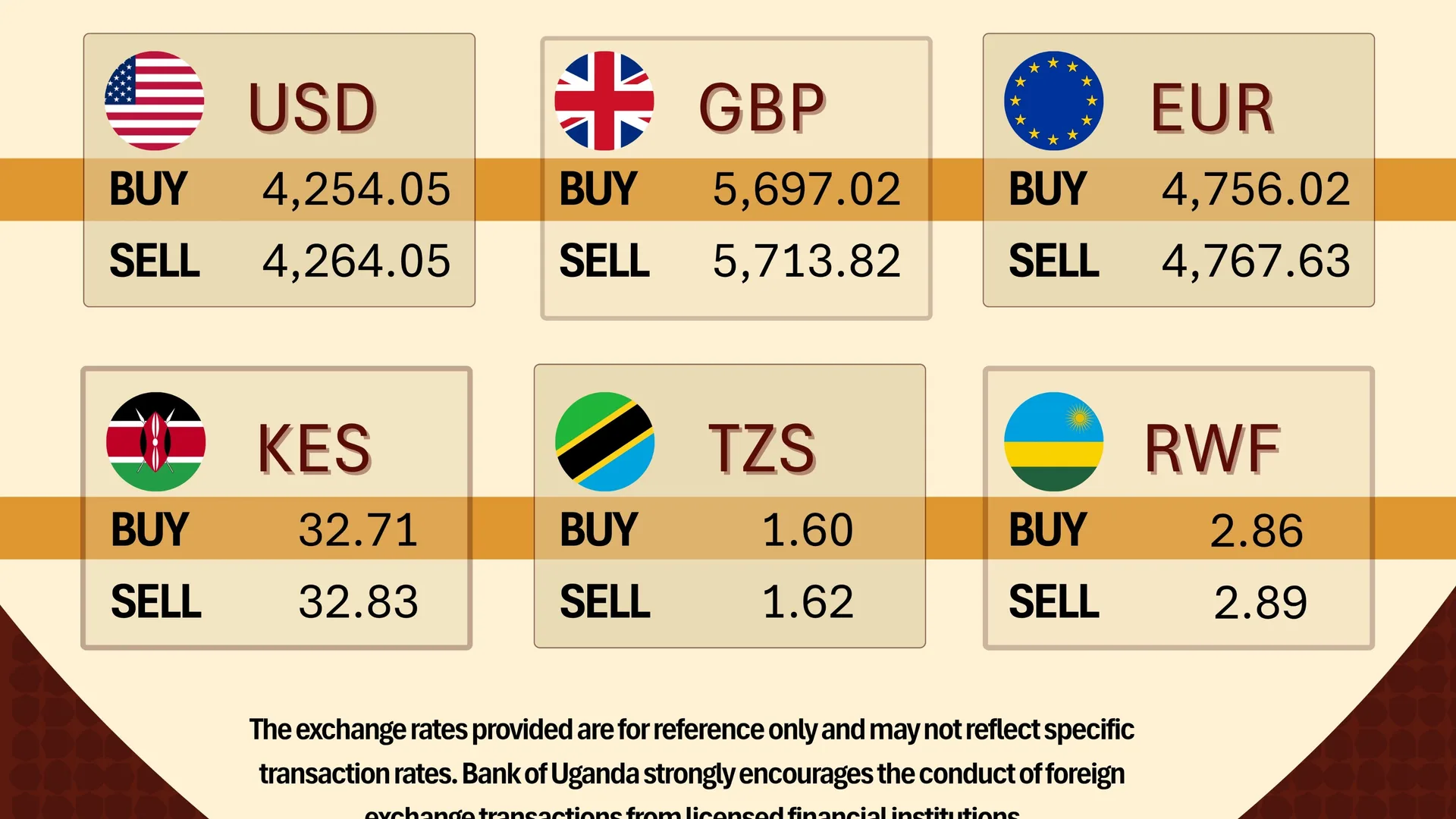
The rising cost of the US dollar against the Uganda shilling is more than just an economic statistic. For ordinary Ugandans, it has direct implications for household budgets, business operations, the cost of living and the purchasing power of their money.
The rising cost of the US dollar against the Uganda shilling is more than just an economic statistic. For ordinary Ugandans, it has direct implications for household budgets, business operations, the cost of living and the purchasing power of their money.
As of November 4, 2026, the US dollar was trading at approximately UGX 4,200–4,278, depending on the exchange-rate reference. This represents a significant weakening of the shilling compared to the end of 2025, when the dollar traded at approximately UGX 3,614.50.
To understand what this means, consider someone who needed $100 at the end of 2025. They would have spent approximately UGX 361,450. At an exchange rate of UGX 4,200, the same $100 costs UGX 420,000. That is an additional UGX 58,550 for the same amount of foreign currency.
For someone earning a fixed salary in Uganda shillings, this difference can have serious financial implications.
The impact on everyday life
One of the immediate consequences of a weakening shilling is the rising cost of imported goods. Uganda depends on imports for several essential products, including fuel, medicines, electronics, machinery and industrial raw materials. Since many international transactions are conducted in dollars, importers require more shillings to purchase the same quantities of goods.
These additional costs are often transferred to consumers through higher prices. Consequently, families may spend more on household essentials, school supplies, transportation and other everyday needs.
Fuel prices are particularly important because Uganda imports refined petroleum products. When the shilling weakens, importing fuel can become more expensive, potentially increasing transportation and distribution costs and contributing to higher prices across different sectors.
Food prices are another concern. Uganda's annual inflation increased to 5.8% in October 2026, from 4.6% in September, while food inflation rose to 10.7%. Although food prices are influenced by several factors, including weather, supply and transportation, currency depreciation can add further pressure.
For households already struggling to balance rent, school fees, transport and food expenses, these increases leave little room for financial adjustment.
Small businesses are also feeling the pressure
Small and medium-sized enterprises that depend on imported products and raw materials are particularly vulnerable. An entrepreneur importing clothes, electronics, beauty products or restaurant supplies must now spend more shillings to pay foreign suppliers.
Business owners are consequently forced to make difficult decisions: increase prices and risk losing customers, absorb the additional costs and reduce profit margins, or purchase smaller quantities of stock.
Businesses with dollar-denominated loans also face higher repayment costs when converting their local currency earnings into dollars.
Are there any beneficiaries?
Despite these challenges, a weaker shilling can benefit some sectors. Ugandans receiving money from relatives abroad may receive more shillings when converting their dollar remittances. Exporters, including coffee businesses earning in dollars, may also receive more local currency for their products.
The tourism industry can potentially benefit because Uganda becomes relatively cheaper for international visitors with stronger currencies.
However, these benefits are not automatic, particularly for businesses that also depend on imported supplies and equipment.
What is being done?
In October 2026, the Bank of Uganda increased the Central Bank Rate from 9.75% to 12% in response to inflationary and currency pressures. It also took measures involving commercial bank reserves and foreign exchange market interventions.
While these interventions can help stabilise the shilling, higher interest rates can make borrowing more expensive for individuals and businesses, potentially slowing investment and economic activity.
In the long term, Uganda needs to strengthen its capacity to earn foreign exchange through agriculture, manufacturing, tourism, value addition and exports. Supporting local industries and reducing unnecessary dependence on imported products could also help improve economic resilience.
Ultimately, the rising cost of the dollar is not simply a conversation for economists and policymakers. It affects the mother whose monthly budget no longer stretches far enough, the entrepreneur struggling to restock her business, the student whose education expenses are linked to foreign currency and the worker whose salary remains unchanged despite rising prices.
For the ordinary Ugandan, the most important question is not simply how much the dollar costs today, but how much further their money will go tomorrow.