
Economy
The Price of Easy Money: How Uganda’s Loan Apps Are Pulling Young Borrowers Into Debt
Digital credit puts quick cash in reach, but for young Ugandans, easy borrowing can come at a heavy price.
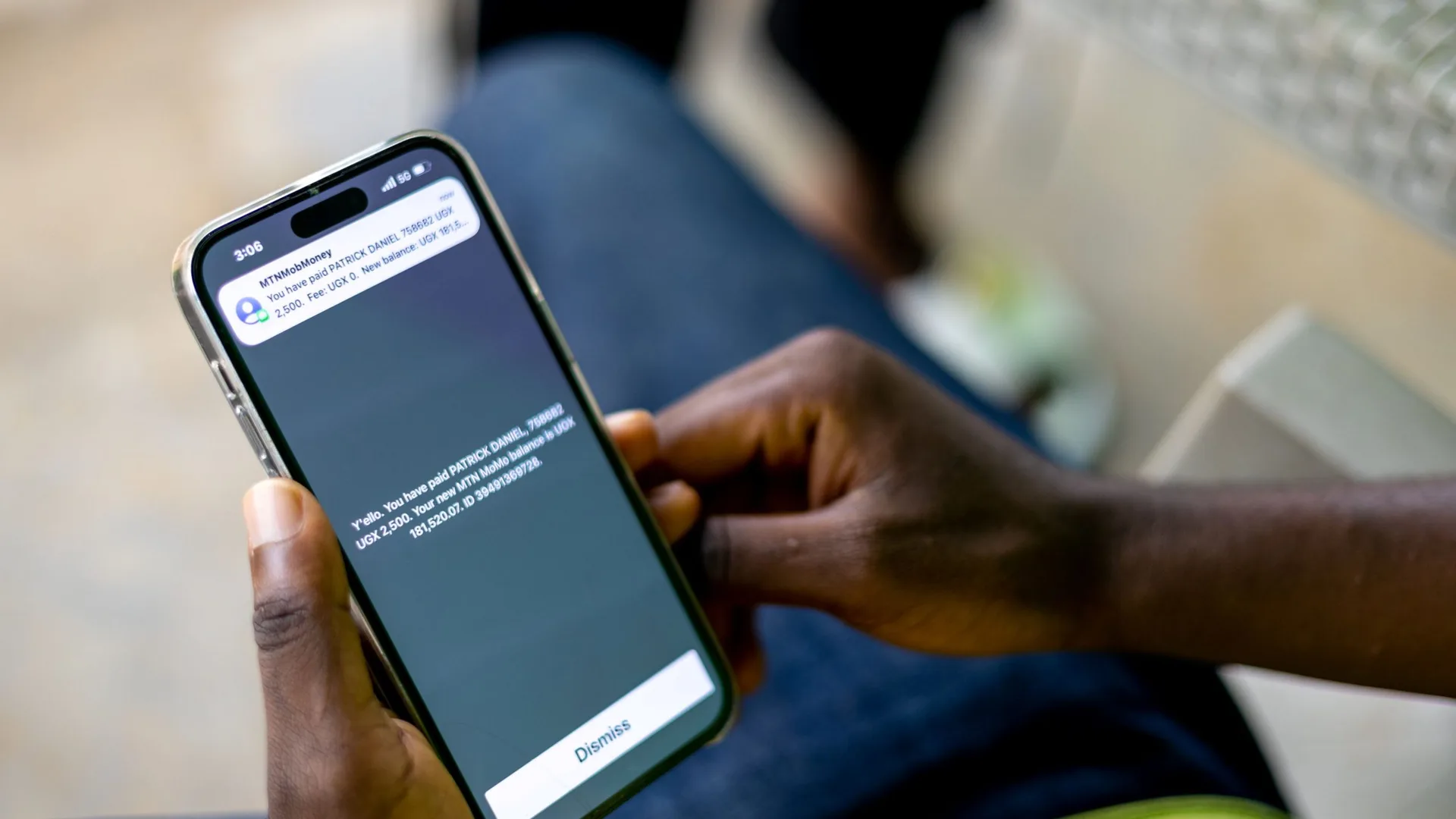
Uganda’s digital lending boom is putting quick cash at young people’s fingertips, but rising borrowing, missed repayments and aggressive debt recovery are raising fresh concerns about the hidden cost of easy credit.
The Price of Easy Money: How Uganda’s Loan Apps Are Pulling Young Borrowers Into Debt
By Aulah Najjuuka
Digital credit is putting money within reach of Ugandans in seconds but for young borrowers facing rising living costs and uncertain incomes, the convenience can come at a heavy price.
A few taps on a smartphone can now be enough to put money on a Ugandan’s mobile phone. No bank queue. No guarantor. No pile of paperwork.
For a young person facing an unexpected bill, a business shortfall, transport costs or simply running out of money before payday, the appeal is obvious.
But the growing popularity of mobile loan apps is creating another side to Uganda’s digital-finance story: borrowers who move from one short-term loan to another, struggle with repayment and, in some cases, face aggressive debt-collection practices.
The scale of Uganda’s digital-credit boom is difficult to ignore.
Bank of Uganda data reported in 2026 shows that digital loan transactions rose to 306.3 million in 2025, up from 67.6 million the previous year showing a 352.8# increase. The value of loans disbursed also nearly doubled to Shs4.8 trillion.
The figures point to a financial system increasingly built around instant access to credit and young Ugandans are growing up in the middle of that transformation.
When borrowing becomes as easy as sending a text
Digital credit has changed what borrowing looks like. Traditionally, obtaining a loan could involve a bank visit, documentation, collateral, references and waiting for approval. Mobile lending has compressed much of that process into minutes.
For young workers, students and small entrepreneurs without assets to use as collateral, that accessibility can be valuable.
A 2025 study conducted at Uganda Christian University (UCU) examined mobile-loan borrowing among 357 university students, looking specifically at financial literacy, consumer protection, attitudes towards digital credit and loan adoption. The study found that digital consumer protection and borrowers’ attitudes were important factors influencing the adoption of mobile loans. It also noted that borrowing can be driven by necessity rather than preference.
That distinction matters.
For many young people, the decision to borrow may not begin with a desire for unnecessary spending. It can begin with a very ordinary problem like rent is due, a phone needs repair, a business needs stock, an allowance has run out or an emergency has arrived.
The problem comes when a short-term solution becomes a recurring financial habit.
The numbers behind the debt problem
A 2025 Financial Consumer Protection Survey by Innovations for Poverty Action (IPA), based on 1,001 digital-financial-service users in Uganda, found that 57% had taken mobile loans.
Among mobile-loan users, 45% had defaulted during the previous year, while about one-third had multiple active loans at the same time.
The survey also found that 31% had reduced food expenditure to repay debt, while 22 percent reported experiencing debt-collector harassment.
The findings offer a sobering picture of what happens when easy access to credit meets financial vulnerability.
The same survey found that only 35% of respondents met its definition of financial literacy, while younger consumers were among those most likely to struggle with accessing emergency funds. Half of those surveyed would have difficulty raising about UGX184,000 in an emergency within 30 days.
For someone living from one income payment to the next, that gap can make a small loan feel less like a choice and more like the only available option.
The rollover trap
The danger is not always the first loan.
It is what happens after it.
A borrower takes UGX100,000 and expects to repay it when money comes in. But when the repayment date arrives, another expense has emerged. The borrower then takes another loan to clear the first.
The second loan solves the immediate problem but creates another repayment obligation.
Soon, income that would ordinarily go towards food, transport, rent, savings or business investment is being redirected towards debt.
The IPA survey found that 62% of mobile-loan users had missed a scheduled payment within the previous 12 months, while 27 percent said they regretted taking on debt.
This is where the convenience of digital lending can become its greatest weakness.
When borrowing is available around the clock and approval can happen almost instantly, the psychological distance between needing money and borrowing money becomes very small.
When the phone becomes part of the collection process
The concerns extend beyond interest and repayment.
Uganda’s regulators have previously raised concerns about digital lenders collecting excessive personal information from borrowers, including access to phone contacts, galleries and other data.
In 2023, Stella Alibateese, then Director of the Personal Data Protection Office, warned that some borrowers did not understand the privacy implications of what they were consenting to when using digital lending applications.
The regulator also reported complaints involving lenders contacting or harassing third parties connected to borrowers.
The concerns were serious enough to prompt regulatory intervention.
Uganda Microfinance Regulatory Authority’s digital-lending guidelines specifically address concerns including high interest rates, lack of physical addresses, data privacy and confidentiality, while advising the public to avoid unlicensed app-based lenders.
More recently, the digital-credit industry introduced a code of conduct that prohibits practices such as threats, harassment, unreasonable calls and public shaming of borrowers. It also places restrictions on lenders accessing phonebooks, contact lists and photo galleries unless the access is necessary and separately consented to.
The fact that such rules are being strengthened shows that the problem is no longer simply about whether Ugandans can access credit.
It is about how that credit is provided and recovered.
‘People take from one app to pay another’
Edith Tusubira, Executive Director of the Uganda Microfinance Regulatory Authority, has attributed part of Uganda’s digital-debt problem to financial illiteracy and poor borrowing decisions.
“Many borrowers do not understand that a loan must be repaid,” Tusubira told Daily Monitor, explaining that some borrowers take money from one app to pay another.
Her observation captures the central problem facing young borrowers: a loan can solve today’s problem while quietly creating tomorrow’s.
The issue is particularly significant for young people who are entering employment or entrepreneurship without stable incomes, savings or established access to traditional financial services.
The business opportunity and the danger
It would be unfair to describe digital lending as entirely negative.
Digital credit has expanded access to finance for people who may previously have been excluded from formal banking.
FSD Uganda notes that digital lending uses alternative data and mobile-money infrastructure to assess borrowers who may lack conventional collateral. The organisation says digital loans have opened credit access to millions of people who were previously underserved.
The challenge is ensuring that inclusion does not become over-indebtedness.
The International Monetary Fund has similarly noted the rapid expansion of Uganda’s fintech sector, while warning that digital lending has exposed consumers to risks including high interest rates, unclear pricing, abusive debt-collection practices and data-privacy concerns.
In other words, the question is no longer whether Uganda should have digital credit.
It is whether the country can build a digital-credit system in which convenience does not come at the expense of consumer protection.
A generation learning to borrow before it learns to save
For Uganda’s young population, this question carries particular weight.
Young people are among the most digitally connected groups in society, and the smartphone is increasingly becoming a gateway not only to social media, entertainment and work, but also to financial services.
That makes financial education increasingly important.
The UCU study on university students found that financial literacy, digital consumer protection and attitudes towards mobile borrowing all matter in understanding why students adopt digital loans.
The answer, therefore, may not be to tell young people simply to stop borrowing.
It is to help them understand what they are borrowing, what it will cost, whether they can afford the repayment and what happens if they cannot pay on time.
Regulators also have a role to play by ensuring that lenders clearly disclose costs, assess affordability, protect personal data and provide responsible channels for debt recovery.
Because when the barrier to borrowing is reduced to a few taps, the barrier to getting into trouble can become just as small.
Uganda’s digital-credit revolution may have started with the promise of putting financial services into everyone’s hands.
The next challenge is making sure those hands do not end up holding more debt than they can afford.