
Economy
Gov’t Reaffirms Commitment to Inclusive Development
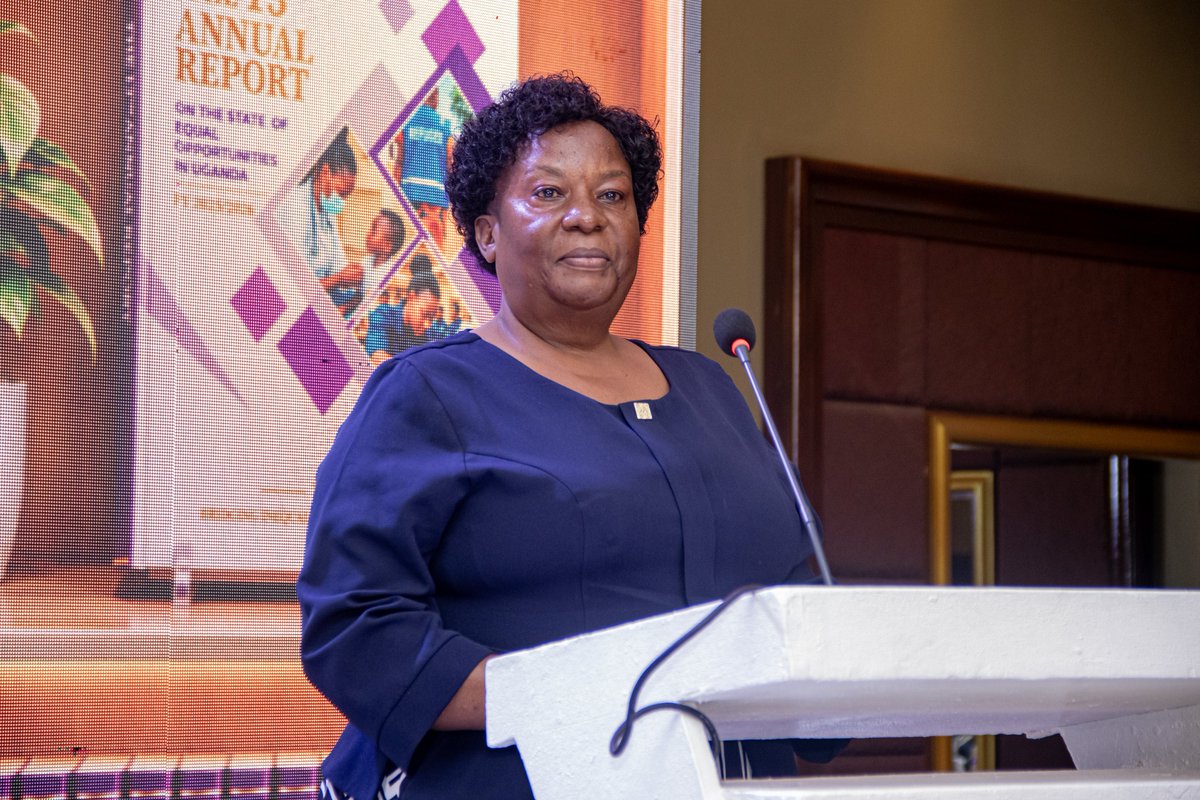
Equal Opportunities Commission launched its 12th Annual Report on the State of Equal Opportunities in Uganda.
It also indicates that poverty declined from 24.5% in 2010/2011 to 16.1% in 2023/2024, while income inequality reduced from 41 % in 2020 to 38% in 2024.
Government has pledged to strengthen inclusive development and address inequalities in access to public services, as Uganda launched the Equal Opportunities Commission’s 12th Annual Report on the State of Equal Opportunities in Uganda.
Minister of State for Gender and Culture, Hon. Cissy Mulondo, said government would consider the Commission’s recommendations in planning and budgeting for the next financial year, urging ministries, departments and agencies to translate commitments on gender and equity into measurable results.
She called on accounting officers to integrate the recommendations into their plans and budgets, particularly under the Fourth National Development Plan (NDP IV), to ensure that vulnerable and marginalised groups benefit from government programmes.
Mulondo emphasised that inclusive development must go beyond policy commitments and be reflected in the allocation of resources and delivery of services. She also highlighted the importance of aligning government interventions with the Parish Development Model and the country's broader economic transformation agenda.
The report, covering the 2024/2025 financial year, is themed “Inclusive Service Delivery for Sustainable and Equitable Development” and examines the extent to which different groups of Ugandans are accessing and benefiting from government programmes.
In her foreword, Equal Opportunities Commission Chairperson, Hon. Safia Nalule Juuko, described the report as a critical accountability instrument for assessing the country's progress in promoting equity, non-discrimination, inclusion and social justice.
“It reflects Uganda’s continued commitment to upholding the constitutional principle of equality and ensuring that no one is left behind in national development,” she said.
The report highlights progress in the economy, noting that Uganda’s economy grew to Shs226.3 trillion in the 2024/2025 financial year. It also indicates that poverty declined from 24.5% in 2010/2011 to 16.1% in 2023/2024, while income inequality, measured by the Gini coefficient, reduced from 41% in 2020 to 38% in 2024.
However, the Commission notes that economic growth must be accompanied by deliberate efforts to ensure that its benefits reach all sections of society.
The assessment examines inequalities in lower secondary education, access to health facilities in island and mountainous communities, political participation among marginalised groups and access to decent housing. It also considers youth substance abuse and the effect of creating new districts on service delivery.
Juuko called for sustained investment and collaboration among government institutions, civil society, the private sector, faith-based organisations and development partners to address the structural causes of inequality.
“Effective implementation of the recommendations will require collective action and shared responsibility to address the structural drivers of inequality,” she said.
The report further calls for stronger attention to the implementation of recommendations from previous annual assessments, reinforcing the need for government institutions to move beyond identifying gaps and take practical steps to address them.
The Commission says Parliament also has an important role in strengthening oversight and advancing laws and policies that promote equal opportunities and inclusive development.
The report is intended to guide policy and planning by identifying areas where access to services and participation in national development remain unequal, particularly for women, children, persons with disabilities, older persons and other vulnerable groups.