
Banking
Central Bank Maintains CBR at 12% as Inflation Continues to Rise
The decision comes as headline inflation rose to 5.8% in October, up from 4.6% in September
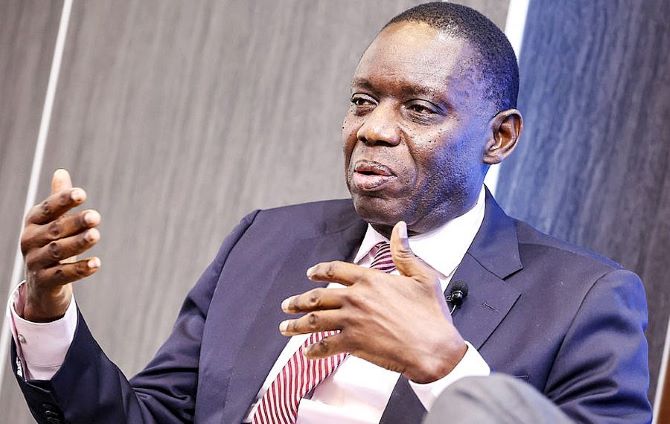
The Bank of Uganda (BoU) has maintained its Central Bank Rate (CBR) at 12%, despite rising inflationary pressures driven by higher global energy prices, exchange rate depreciation and adverse weather conditions.
The Bank of Uganda (BoU) has maintained its Central Bank Rate (CBR) at 12%, despite rising inflationary pressures driven by higher global energy prices, exchange rate depreciation and adverse weather conditions.
In the November 2026 Monetary Policy Statement released on Monday, November 9, the Governor, Bank of Uganda, Michael Atingi-Ego stated that they had decided to retain the benchmark lending rate to allow previous monetary policy measures more time to take effect while monitoring developments in the economy.
The decision comes as headline inflation rose to 5.8% in October, up from 4.6% in September. Core inflation also increased to 4.4% from 3.7% over the same period, indicating that rising prices are spreading beyond food and energy.
According to the Bank, the increase in inflation was largely driven by energy and weather-related shocks, alongside depreciation of the Uganda shilling and higher international oil prices linked to the ongoing conflict in the Middle East.
Although annual average headline and core inflation remained relatively moderate at 3.6% and 3.3% respectively over the 12 months to October, both were still below the Bank's medium-term inflation target of 5%.
However, the outlook suggests that inflationary pressures could intensify in the coming months. The Bank has revised its forecasts upwards, projecting core inflation to average between 6.0 and 6.5% over the next 12 months, while headline inflation is expected to range between 7.5 and 8%.
The Bank warned that further depreciation of the shilling, elevated global oil prices and unfavourable weather conditions could push domestic consumer prices higher. It also noted that increased import costs and tighter global financial conditions could add to inflationary pressures.
Despite maintaining the CBR, the MPC announced changes to its monetary policy framework, widening the band around the CBR from plus or minus two to plus or minus three percentage points. It also increased the margins for the rediscount and bank rates to four and five percentage points respectively.
Consequently, the rediscount rate increased to 16%, while the bank rate rose to 17%.
The Bank said the adjustments were intended to support tight shilling liquidity as it continues working towards maintaining price stability.
Meanwhile, Uganda's economic growth outlook has weakened. The Bank estimates that economic growth moderated to approximately 5.3% in the quarter ending September 2026, compared with 6.8% recorded by the Uganda Bureau of Statistics (UBOS) for the quarter ending June.
It has also revised its economic growth projection for the 2026/27 financial year downwards to between 5.5 and 6%, from the earlier forecast of 6 to 6.5%.
The downward revision reflects tighter domestic and international financial conditions, the recent depreciation of the shilling, geopolitical uncertainty and elevated international energy prices.
The Bank nevertheless expects economic growth to strengthen over the medium term, averaging approximately 8% over the next five years, supported by private investment, stronger export performance, developments in the oil sector and the government's Tenfold Growth Strategy.
Explaining its decision to maintain the benchmark rate, the MPC said current financial conditions were sufficiently tight to address inflationary pressures while allowing the effects of previous policy measures to work through the economy.
The Bank reiterated its commitment to maintaining price stability, noting that future monetary policy decisions would be guided by incoming economic data, the inflation outlook and developments in the global economy.