
Latest
Banks urged to expand lending to women as Uganda launches WSME Data Dashboard
Bank of Uganda Deputy Governor Prof. Augustus Nuwagaba said financial inclusion must go beyond financial literacy
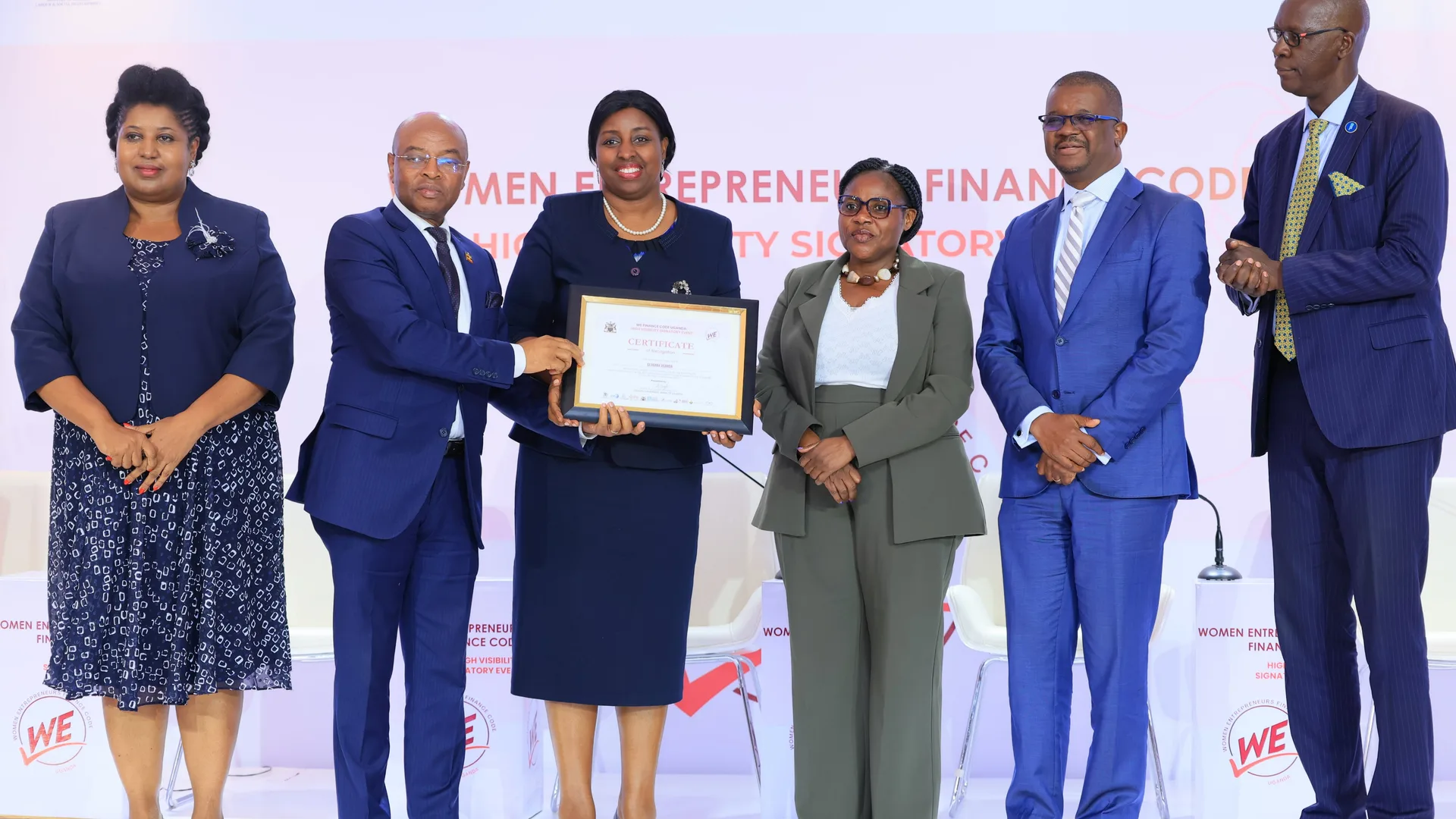
The call was made during the WE-Finance Code Uganda High-Visibility Signatory Event and Women-owned Small and Medium Enterprises (WSME) Data Dashboard launch at Kampala Serena Hotel.
Financial institutions in Uganda have been urged to expand lending to women entrepreneurs and develop flexible financing products that respond to the realities of women-owned businesses, as the country steps up efforts to close the gender gap in access to finance.
The call was made on November 23, 2026, during the WE-Finance Code Uganda High-Visibility Signatory Event and Women-owned Small and Medium Enterprises (WSME) Data Dashboard launch at Kampala Serena Hotel.
The event, hosted by Bank of Uganda and the Private Sector Foundation Uganda (PSFU), also marked one year since Uganda adopted the WE Finance Code, an initiative that brings together financial institutions, regulators and development partners to improve access to finance for women-led enterprises.
Bank of Uganda Deputy Governor Prof. Augustus Nuwagaba said financial inclusion must go beyond financial literacy to ensure that women can access financial services and build businesses capable of withstanding economic shocks.
“Financial literacy means that people understand financial products and services. Financial inclusion means they can access those products and services from commercial banks and other financial institutions,” Nuwagaba said.
He noted that although financial literacy in Uganda was estimated at 81%, access to affordable credit remained a challenge for many women entrepreneurs.
According to figures presented at the event, approximately 40 per cent of women are engaged in business, but only 18% have access to loans, while just nine per cent access commercial loans.
Nuwagaba called on financial institutions to reconsider traditional collateral requirements and explore alternative financing arrangements, including group-based lending, to reach more women entrepreneurs.
He also encouraged banks to recognise women's repayment capacity and develop products that allow them to participate more meaningfully in the financial sector.
Sarah Kagingo, Vice Chairperson of the PSFU Board, challenged financial institutions to design financing products around the operating realities of women-owned businesses rather than applying uniform lending conditions.
Citing findings from the Generating Growth Opportunities and Productivity for Women Enterprises (GROW) Project, Kagingo said 77.2% of women-led businesses that accessed the project's financing facility reported an increase in household income.
She also reported that business formalisation among participating enterprises increased from 17.4% to 42%, while profits were 3.2 times higher compared with businesses that had not accessed the programme.
Kagingo urged banks to consider alternative collateral arrangements and align loan repayment schedules with business cycles, particularly in sectors such as tourism and hospitality.
“Not every woman entrepreneur can provide conventional security or collateral,” she said.
The launch of the WSME Data Dashboard is expected to strengthen efforts to address these financing gaps by providing a more coordinated approach to collecting, analysing and reporting data on women's participation in the financial sector.
Dr. Ruth Aisha Biyinzika Kasolo, coordinator of the World Bank-funded GROW Project, said Uganda had previously faced challenges in measuring financing extended to women-owned businesses because financial institutions used different definitions of what constituted a women-owned enterprise.
She said the WE Finance Code would establish a common framework for financial institutions to track loans, savings, electronic money transactions and insurance products accessed by women.
“Uganda has faced a challenge because we did not have a standard definition of a women-owned enterprise,” Kasolo said.
She explained that standardised reporting would enable policymakers and financial institutions to identify financing gaps and measure progress in expanding women's access to financial services.
Uganda Bankers' Association Executive Director Wilbrod Owor said financial institutions needed to translate the data they already collect into practical financial products that address the needs of women entrepreneurs.
He urged banks' product development teams to “champion more innovative products” that enable women to access financing when they need it to purchase supplies, reach customers and generate income.
The WE Finance Code is a global initiative coordinated by the Women Entrepreneurs Finance Initiative (We-Fi), bringing together financial service providers, regulators and development partners to increase financing for women-led micro, small and medium enterprises.
Under the framework, participating institutions commit to strengthening leadership on women's finance, introducing measures to support women entrepreneurs and collecting data to track financing extended to women-owned businesses.
The initiative is expected to help Uganda move beyond general commitments to women's financial inclusion towards evidence-based policies and financial products that enable women-owned enterprises to grow, create jobs and contribute to the country's economic development.