
Conference
Uganda Industrialisation Conference 2026
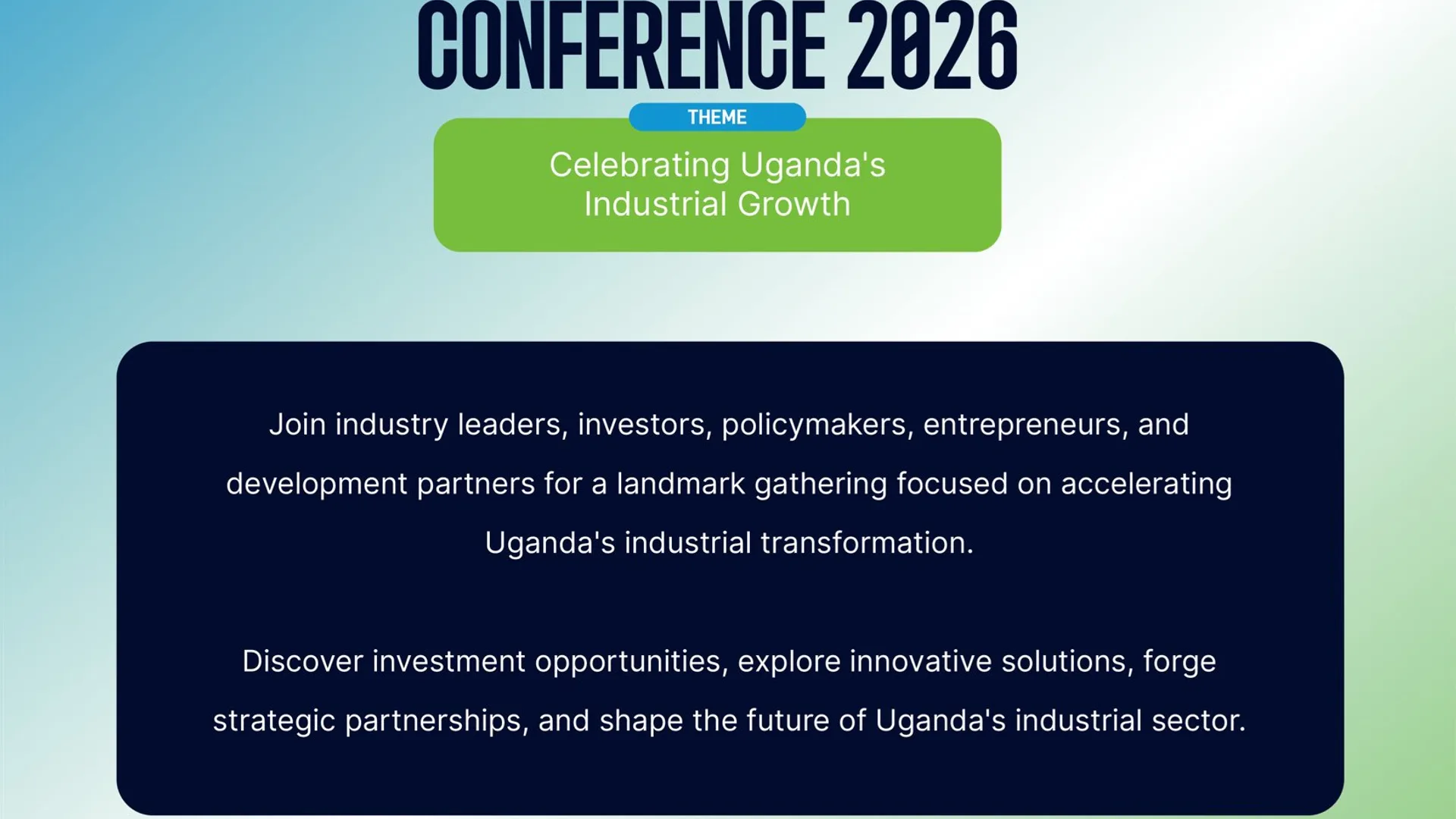
The three-day conference will take place at Speke Resort Convention Centre in Munyonyo, Kampala, under the theme “Celebrating Uganda’s Industrial Growth.”
- When
- Wednesday, 18 November 2026 at 09:00
- Where
- Speke Resort Convention Centre, Munyonyo, Kampala
- Organiser
- Uganda Development Corporation
Uganda is set to host its first National Industrialisation Conference from November 18–20, 2026, as government intensifies efforts to expand domestic manufacturing, attract investment and accelerate its ambition of growing the economy to US$500 billion.
The three-day conference will take place at Speke Resort Convention Centre in Munyonyo, Kampala, under the theme “Celebrating Uganda’s Industrial Growth.” It is organised by the Ministry of Trade, Industry and Cooperatives in partnership with the Uganda Development Corporation (UDC), the United Nations Industrial Development Organization (UNIDO) and other stakeholders.
The conference was officially launched on November 4 by the Minister of Trade, Industry and Cooperatives, Hon. Sanjay Tanna, during a media briefing at the Uganda Media Centre. It is expected to bring together government officials, manufacturers, investors, development partners and policymakers to discuss strategies for accelerating Uganda's industrial transformation.
Speaking during the launch, Tanna said Uganda's industrial sector had expanded from approximately 81 industries in 1986 to more than 12,000 formal manufacturing industries today.
The sector employs more than 1.8 million Ugandans, contributes approximately 24.9 per cent to the country's Gross Domestic Product (GDP) and accounts for about 33 per cent of total tax revenue collected by the Uganda Revenue Authority.
Tanna said industrialisation remains central to the government's Ten-Fold Growth Strategy, which seeks to grow Uganda's economy to US$500 billion through increased production, investment, exports and value addition.
Uganda's exports of goods and services have also increased from US$5.93 billion in 2022 to US$18.04 billion in 2026, representing a 204% increase. Gold, coffee, cocoa, sugar, fish and manufactured products are among the key contributors. The minister also noted that Uganda had become a net exporter of several products it previously imported, including soap, sugar, milk, salt, cooking oil, cement, steel and paper.
However, the conference is expected to address persistent challenges affecting manufacturers, including high electricity costs, taxation, limited access to industrial financing, shortages of raw materials, labour constraints and market access.
Uganda Manufacturers Association Executive Director Dr Ezra Burungi has called for practical discussions on these challenges, particularly those affecting small and medium-sized enterprises struggling to compete with imported products.
The conference will provide an opportunity for government and the private sector to explore interventions that can reduce production costs, improve access to affordable financing and strengthen local supply chains.
UDC marks a decade of industrial investment
The conference will also coincide with celebrations marking 10 years since the re-establishment of the Uganda Development Corporation in 2016 and the commemoration of Africa Industrialisation Day on November 20.
Over the past decade, UDC has invested in 28 companies, supporting more than 5,799 direct jobs and thousands of indirect employment opportunities.
According to UDC Executive Director Dr Patrick Birungi, enterprises supported by the corporation collectively purchase more than 35,000 tonnes of agricultural produce annually, paying approximately Shs138.45 billion to farmers and local suppliers. They also generate about US$14.22 million in export earnings and contribute more than Shs30 billion in taxes.
UDC's next phase of investment will prioritise strategic manufacturing sectors, agricultural value addition, industrial financing and infrastructure development. Identified areas include animal and fish feeds, packaging materials, ethanol-based fuel blending and medical supplies.
Government is also strengthening UDC and the Uganda Development Bank to provide long-term financing for manufacturers. UDC has a capitalisation target of Shs5 trillion over five years, while UDB has cumulative capital of approximately Shs1.6 trillion.
Industrial parks and regional markets
Uganda's industrialisation programme is further supported by the development of industrial parks. Of the 22 planned parks, eight are operational, attracting approximately US$5.8 billion in domestic and foreign investment and generating more than 163,010 jobs.
Government is also targeting regional and continental markets through the East African Community, COMESA and the African Continental Free Trade Area (AfCFTA), which provides access to a market of approximately 1.4 billion people.
Ahead of the conference, government will showcase ongoing industrial investments, including the groundbreaking of Pamoja Packaging and Industrial Solutions Limited in Mukono on November 5, the commissioning of Bukona Fuel Blending Limited in Malaba on November 6, and a new production line at East African Medical Vitals Limited in Namanve on November 10.
As Uganda prepares for its inaugural National Industrialisation Conference, attention will turn to how the country's growing manufacturing sector can translate into more employment, better incomes and improved livelihoods.
Beyond establishing more factories, industrialisation will require stronger local supply chains, competitive production costs and greater participation of small businesses, farmers and local suppliers.
The conference therefore presents an opportunity for stakeholders to move beyond celebrating industrial growth and agree on practical measures to make manufacturing a stronger driver of Uganda's economic transformation.